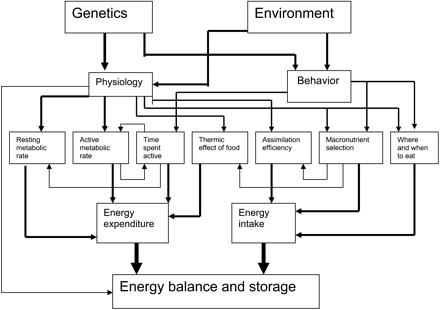
As Guyenet explains: -
"As far as the brain is concerned, the fact that Brussels sprouts are loaded with vitamins and minerals counts for approximately nothing, because they are low in calories. In contrast, we crave ice cream because our brains know that its flavour, texture, and appearance predict the delivery of a truckload of easily digested fat and sugar. Having evolved in an era of relative food scarcity, the human brain interprets this as highly desirable and draws us toward the freezer."
The unconscious parts of the brain can drive us to seek out these highly valuable foods, even if we aren't hungry. This is why most of us can eat dessert, even after a large meal.
So what can we do to avoid these cravings? Well the first point to make here is that if someone were looking to quit smoking, they wouldn't leave packets of cigarettes lying around their home or office. In fact, you would do all you can to actively avoid cigarettes, cigarette smells, cigarette advertising etc. Similarly with food it is important to limit what Guyenet calls ‘cue exposure’, such as:
- Try to avoid advertisements on TV, magazines etc
- Controlling home and work food environments
Guyenet also suggests focusing on simple, unrefined foods such as fruits, vegetables, meat, dairy, potatoes, sweet potatoes etc. These foods do not have the high concentrations of nutrients that spike the dopamine response in the brain.
The reward associations that you form with certain foods can be forgotten over time - therefore ‘starve a craving’. Cheat days/meals can re-active a craving for a certain food.